






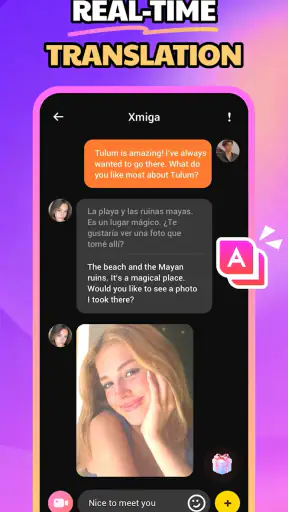
Xmiga caught my attention because it approaches social interaction through video rather than treating it as another text-first feed. From my first sessions, I found the appeal easy to understand: opening the app feels more immediate than scrolling through carefully edited posts, because the main promise is meeting people through live visual conversation. That immediacy can make a quiet evening feel more social, especially when I want a quick human connection instead of another series of comments.
At the same time, I would not describe it as an app that automatically becomes part of everyone’s routine. Video socializing asks more from me than messaging does. I need to be comfortable appearing on camera, willing to manage unexpected interactions, and prepared to leave conversations that do not feel worthwhile. My overall impression is that Xmiga has a strong first-week hook, but its lasting value depends on whether I can turn spontaneous use into a comfortable habit.
What using Xmiga feels like in the first week
Xmiga is a free social app from BESTSIV STUDIO, aimed at people who want video-based interaction rather than a conventional text community. It is listed for mature users aged 17 and over, which is important before anyone considers installing it for a younger family member. The app is available on Android from version 7.0 onward, so it can fit a wide range of older devices, although the actual quality of a video experience will still depend on the phone, camera, microphone, and network connection.
The first-week appeal comes from reducing the distance between discovering someone and actually engaging with them. In a normal social feed, I can spend a long time reading profiles, watching clips, and deciding whether to react. Xmiga is more direct. That can be refreshing when I am bored with passive scrolling. A short session can feel more memorable because the interaction has a sense of presence, even if it lasts only a few minutes.
I also noticed that the app’s value changes with my mood. When I want background entertainment, a standard video platform is usually more efficient. When I want to talk, react, and be seen, Xmiga makes more sense. That distinction matters because it prevents disappointment: this is not simply a replacement for a video library or a private messenger. Its appeal is the social moment itself.
For a realistic everyday example, I can imagine using it after work while waiting for dinner to cook. I might have ten minutes available and no desire to commit to a long conversation. Xmiga suits that window better than arranging a scheduled call with friends. But I would keep expectations flexible. Some sessions may feel lively, while others may offer little reason to stay. The app’s spontaneous nature is both its attraction and its first limitation.
The store shows an average rating of 4.5 from roughly 48 thousand ratings, and the app has passed one million installs. Those figures suggest that the concept has found a substantial audience, but they do not remove the need for personal judgment. Social apps are especially dependent on timing, community activity, and the kind of people I happen to encounter. A high rating can tell me that many users enjoy the experience; it cannot guarantee that every session will match my interests.
One practical tip helped me more than simply opening the app whenever I felt bored: I treated the first week as a period for learning my preferred way to participate. I paid attention to whether I enjoyed brief conversations, browsing social activity, or returning to people I found interesting. That small distinction matters because a video social app can become tiring when I use it without a purpose. I got more from it when I entered with a simple intention, such as meeting someone new for a few minutes or checking whether the community felt comfortable that day.
Why the novelty works
Video creates small signals that text cannot provide. Tone, timing, facial reactions, and pauses can make a conversation feel less mechanical. Even when the subject is ordinary, the interaction may feel more personal than exchanging short messages. That is the strongest reason I would recommend trying Xmiga to someone who finds text-heavy social networks distant or repetitive.
There is also less pressure to produce polished content. On a photo-centered platform, I may think about presentation before posting anything. Video interaction shifts attention toward the exchange itself. That can be liberating for users who want conversation rather than public performance, although it does not remove the pressure of being on camera. In practice, I still need to decide how visible I want to be and how much personal information I am comfortable sharing.
The mature age classification reinforces the need for sensible boundaries. I would not treat an open video environment as a place to reveal my address, workplace details, daily schedule, or private contact information. I would also avoid assuming that a friendly first conversation represents a trustworthy relationship. The most useful habit is to keep early interactions light and to leave immediately when someone behaves in a way that makes me uncomfortable.
Does Xmiga keep its value after the first month?
The first month is where Xmiga has to prove more than novelty. A social app earns a permanent place on my phone only when it gives me a reason to return without relying on surprise alone. In my experience, the recurring value here comes from the possibility of finding enjoyable conversations and building a personal rhythm around them. If every visit feels random, the app can quickly become something I open once in a while and then forget.
I would use Xmiga most successfully as a supplement to existing social habits, not as my only social outlet. A few short visits can add variety to a routine that already includes messaging friends, group chats, or video calls. It is less convincing as a complete replacement for those services because established contacts provide predictable value. When I need to speak with a particular person, a regular messenger or scheduled call is more dependable. When I want an unplanned social encounter, Xmiga has the advantage.
A useful long-term workflow is to separate discovery from commitment. I would not feel obliged to continue every conversation simply because it began positively. Instead, I would notice which interactions leave me energized and which ones feel like work. That makes the app easier to maintain because I am selecting for quality rather than treating every available interaction as equally valuable.
Another non-obvious trade-off is that convenience can weaken continuity. Spontaneous video contact is easy to start, but relationships usually need repeated attention. If Xmiga allows me to meet interesting people yet gives me no personal system for remembering whom I enjoyed speaking with, the experience may remain shallow. I found that a simple mental note about the kind of conversations I wanted was more useful than opening the app without a plan. I could then judge each session against that goal instead of chasing endless novelty.
The current version is 1.1.4, which indicates that the app is still at a relatively early stage of its development. I would keep that in mind when deciding how much of my social life to place inside it. Early versions can feel fresh and may change as the developer refines the experience, but they can also have rough edges that become obvious during regular use. For me, that makes Xmiga worth exploring while I remain realistic about its maturity.
There is also a financial point to consider. Xmiga can be installed and used as a free app, but optional in-app purchases range from $0.99 to $99.99 per item. I would not spend money during the first few sessions. The right question is not whether a paid option looks attractive in isolation, but whether it improves a habit I already enjoy. If I am only visiting because the app feels new, paying will not solve the underlying problem of limited recurring interest.
Who gets the most from it
I think Xmiga is a good fit for adults and older teens who enjoy meeting people through video, prefer spontaneous interaction, and are comfortable managing their own boundaries. It may also appeal to someone who finds ordinary social feeds too passive. If I have a flexible schedule and enjoy short conversations with unfamiliar people, the app has a clear role.
It is less suitable for someone who wants carefully controlled communication with known contacts. A traditional video-calling service is better for family conversations, work meetings, or anything that depends on reliability and privacy. A text messenger is better when I am in a noisy place, have limited bandwidth, or do not want to appear on camera. A conventional social network is better if my main interest is reading updates at my own pace.
I would also skip Xmiga if I dislike unpredictable social situations. The app’s central strength can feel like its biggest weakness for a user who wants complete control over who appears, what a conversation becomes, and how much attention it demands. Video interaction is not automatically more meaningful than text; it is simply more immediate. For some people, that immediacy will feel engaging. For others, it will feel intrusive or exhausting.
The maintenance burden behind a video-first habit
Xmiga is not difficult to maintain in the same way as an app that requires constant posting, but it does ask for regular personal effort. I need to protect my time, manage my comfort on camera, and decide when a session has stopped being useful. Those decisions are easy to ignore during the first week because novelty carries me forward. After several weeks, they determine whether the app remains enjoyable.
The first maintenance habit I recommend is setting a natural stopping point before opening the app. Without one, a quick check can turn into a longer session filled with interactions I would not have chosen deliberately. I do not need a strict timer every time, but I find it useful to know whether I have five minutes, half an hour, or no real time at all. This makes spontaneous socializing fit around my day instead of competing with it.
The second is keeping the environment suitable for video. A quiet room, reasonable lighting, and a stable connection make the experience more comfortable for both sides. That may sound obvious, but it changes the quality of a short conversation considerably. If I am in a crowded place or using a weak connection, I am more likely to judge the app unfairly when the real problem is the setting.
The third is protecting emotional energy. Not every conversation deserves patience, and I do not owe an explanation for leaving an interaction that feels unpleasant. I found this especially important because video can make awkwardness more intense than text. A short, polite exit is enough. Long-term enjoyment depends less on maximizing the number of conversations and more on avoiding the few interactions that make me reluctant to return.
Device compatibility is another practical consideration. The minimum Android requirement is version 7.0, which is relatively accessible, but compatibility on paper does not guarantee a smooth experience on every older phone. Video places more demand on a device than simple text messaging. If the camera is weak, the microphone is unreliable, or the phone struggles with modern apps, I would test Xmiga before building a routine around it.
Where fatigue begins
The main source of fatigue is repetition. If the same style of interaction appears again and again, the initial excitement can flatten. This is a common risk for social discovery apps: the promise of meeting someone new is powerful, but novelty alone is difficult to sustain. I would watch for the moment when I start opening Xmiga automatically and leaving without remembering any conversation. That is a sign to reduce usage rather than force the habit.
Camera pressure can create a second kind of tiredness. Even a casual social session requires attention to appearance, surroundings, and privacy. Some days I may want connection without being visible. On those days, a text-based alternative is simply more comfortable. Xmiga works best when I choose video because I genuinely want it, not because I feel that a social app should always demand a more active performance.
Unpredictability can also become a burden. It is exciting when an unexpected conversation is excellent, but frustrating when several visits lead nowhere. I would not use Xmiga when I need a guaranteed outcome. Instead, I would treat it like a flexible social option with variable results. That mindset prevents the app from feeling broken merely because one session is quiet.
There is a financial fatigue risk as well. Optional purchases can make a free app feel more complicated if I begin comparing what is available without paying. My approach would be to use the free experience long enough to understand its everyday value. If I cannot explain exactly why a purchase would improve my regular use, I would leave it alone. A large price range, reaching $99.99 for an item, makes restraint especially sensible.
Finally, social boundaries require ongoing attention. I would avoid moving a conversation to another service too quickly, sharing identifiable details, or assuming that repeated contact equals trust. These are not reasons to reject Xmiga; they are part of using any open social environment responsibly. The mature age classification makes it even more important that younger users are not treated as the target audience and that adults understand the difference between friendly interaction and genuine familiarity.
My long-term verdict on Xmiga
After the first-week excitement fades, I see Xmiga as a niche social tool rather than an app that should replace every other way of communicating. Its best quality is the immediacy of video socializing: I can move beyond passive scrolling and experience a more human exchange. That gives it recurring value when I am open to meeting people spontaneously and have enough time and privacy to participate properly.
Its weaker side is the effort required to keep that experience rewarding. I need to manage my schedule, accept inconsistent sessions, protect my boundaries, and resist spending simply because the app offers optional extras. Those are manageable responsibilities, but they mean Xmiga will not suit someone looking for effortless entertainment or dependable contact with a fixed group of friends.
I would recommend trying it to a mature user who wants a more direct social experience and understands that the quality of the app depends heavily on personal choices and community encounters. I would suggest starting free, using short sessions, and judging the app after several ordinary weeks rather than after one exciting conversation. That approach reveals whether it has genuine recurring value or is only filling a temporary boredom gap.
My final judgment is positive but selective. Xmiga earns lasting space when it becomes a deliberate social option, not an automatic scrolling habit. BESTSIV STUDIO has built an app with a clear reason to exist, and its 4.5 average rating shows that many users connect with that idea. For me, it stays worthwhile when I use it for purposeful, bounded video interaction. If I want privacy, predictable contacts, or low-effort browsing, I would choose a different kind of app instead.


